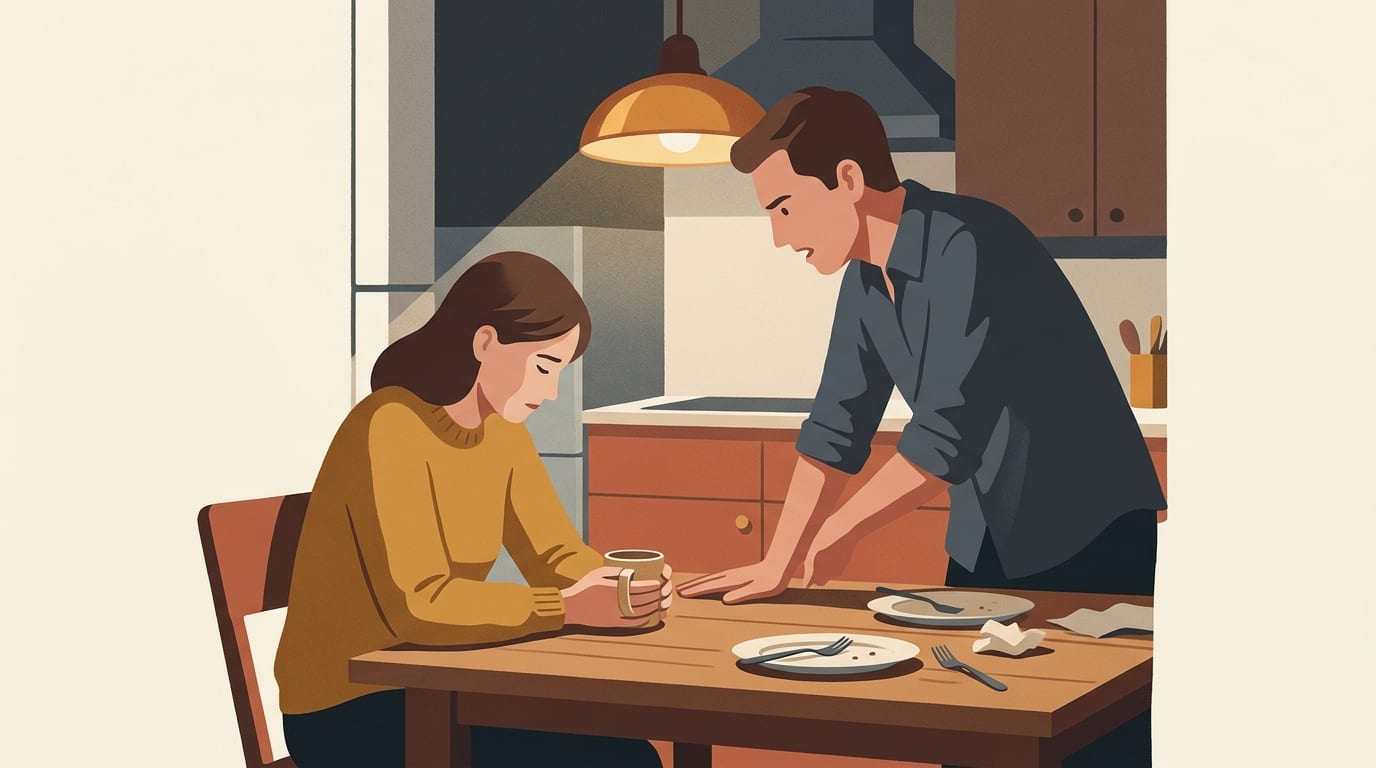
All kids learn in some kind of school environment, but no class lesson will teach them how to grow up with a narcissist. Maybe that was you; someone who was forced to develop survival skills before they even truly understood why they had to exist in your life.
It's hard, harder than people who don't understand will ever fathom.
I had a client tell me she learned to read her mother's footsteps on the stairs by age six. Fast, slow, heavy. Each one meant something different.
What did those lessons teach you, though? Today we look into that in depth.
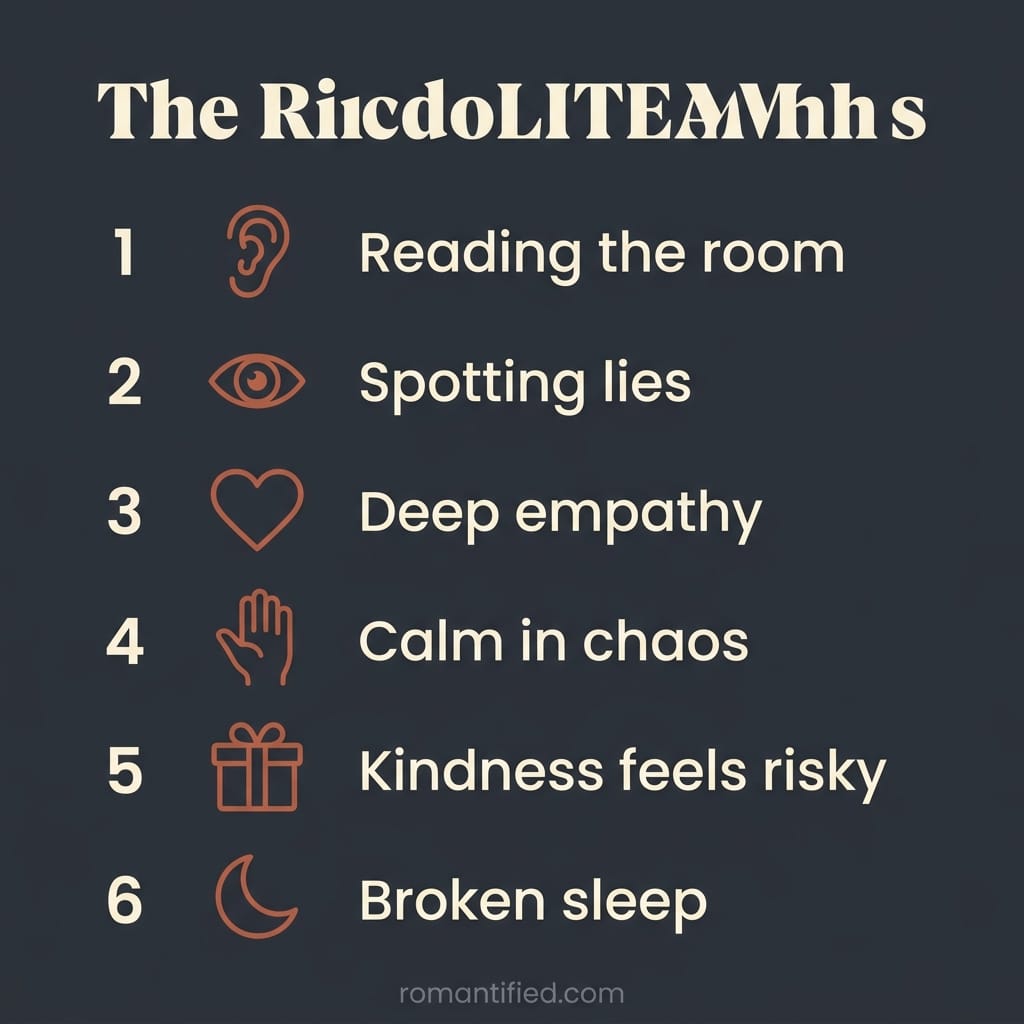
1You learn a certain language before you're even old enough to understand what it means
I hate that any child has to endure this type of experience, but here we are, discussing it. This goes back to as early as they're able to start picking up what's going on around them, and I want to talk about those. Reading a room.
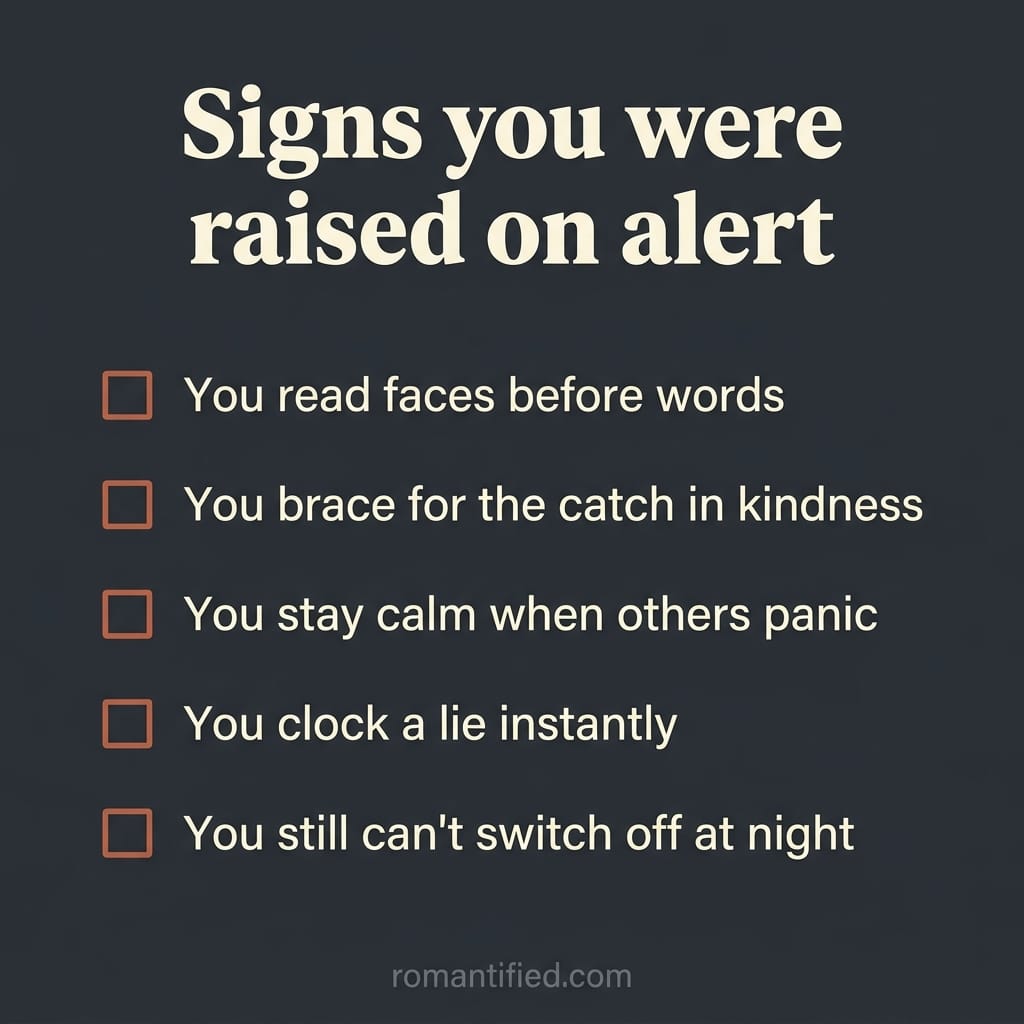
Catching little expressions on your narcissistic parent's face. Knowing that slight change from a normal tone to one that sounds threatening or dangerous. Body language, and spotting how you think they seem even if they say they're fine. It all matters, and it all counts.
As a kid, you won't have even known what you're doing, but the older you got, the more you become used to being able to read them like a book, and it was a language that nobody else will even know how to untangle or comprehend.
Kids should be playing and having fun, not reading their toxic parent like this. You'd heard those words:
I'm fine. You knew they weren't. That tone could mean several things, but it was never good, and that's all you took from it. It meant you had to find a fast way to be sharp, and you had to live that way every single day.
One woman told me she could tell from the sound of her dad's keys in the door whether the whole evening was ruined. She was seven.
2Lies are captured before they've even finished falling out of someone's mouth
I don't know if this was you growing up, but let me brief you on what it's like to be raised by a narcissistic parent. That house will never be safe unless they leave it.
They are not predictable environments, and from day to day, you never know what you're going to witness, hear, see and feel. Nobody in a safe, regulated home had to grow up even thinking that spotting a lie was something they even had to think about.
They were happy and looked after; the home was secure. If you are the child of a narcissist, it will have been a very well built survival skill to notice those who look you right in the eye and say, "I didn't say that."
 See also4 Chilling Reasons Why a Narcissist Wants a Family, and It Has Nothing to Do With Love
You know they did, because you were in that very same room yesterday hearing them, and suddenly you're to blame for remembering it and raising the topic again. You were gaslighted, too.
Whenever you had a very real, very reasonable reaction to something, you were laughed at, or told you're so dramatic. It's only now as an adult you finally understand what that meant every day over and over.
You are able to spot inconsistent behaviors in people, and you feel like you pick up right where any story has a gap in it that you're getting that prickly feeling over. No, you're not paranoid. You're tuned in, and not by choice.
You were forced to pay attention as a form of self-protection.
You clocked the shift in their tone before they'd even finished the sentence. Micro expressions, the pause before the lie, the slightly too casual, "What are you talking about?" You saw it all.
3Your empathy is deeply ingrained
Managing someone else's emotions as a kid should never happen; period. It just shouldn't be something any kid goes through, I don't care who argues with me about it. Trying to simply get through a day by making sure you were trying to keep the narcissist calm?
 See also5 Passive Aggressive Tactics Narcissists Use That You'd Never Recognize As Abuse
I wouldn't wish that on anyone. It meant you had to build qualities that allowed you to gauge how they are, and what kind of mood they were in. It meant you had to tune in to their energy and world, and abandon yours every single time.
You became a tiny weather forecaster. Door slams louder than usual? Storm coming. Keys placed down softly? Maybe safe for now. That's not childhood, that's surveillance work.
As a result, you grew up being easily able to tell how other people were feeling, and even if someone is near you and smiling, you'd know if that smile was fake. You'd be able to tell when your help was needed.
You'd know where and when to come in with a joke to lighten the mood, or be there for someone even before they really knew it themselves. Yes, it means you're emotionally intelligent. It means you've learned something that not many others even can begin to learn.
Sadly, it's how you survived as a kid, and you've taken that into the rest of your life.
It took that skill to keep you alive back in your early years, and the only reason you had to do that was because you were partially raised by someone who was intent on making your life and everyone else's around you hell.
4When everyone else is not, you know just how to remain calm
It's weird, isn't it? The whole world could be falling apart around you, and you're the only calm one.
People look at you and wonder how you're so level-headed in these crises, and all you think is, "I've been handling these since I was old enough to sit up and pay attention."
 See also8 Ways The Narcissist Conditioned You To Believe Your Needs Don't Matter
You see others freeze up, like they have no idea what to do. It's then you adapt, and fast. You know you have to keep moving, and so you do what it takes.
It's children who grow into adults that know what this feels like who know they don't necessarily like filling that role, it's just automatic, and you do it because it's like a reflex that you know you can solve.
People notice it about you, and even celebrate, and there you are, wondering why your childhood is something for them to admire. They have no idea, and that's the reality. You know where it came from, and you know how you got here.
One woman told me she used to talk her mum down from screaming fits before she could tie her own shoes. That's not a skill. That's a childhood spent on alert.
5People are fooled, yet you see through it all
It will always be difficult for a child to see people be kind and loving to the parent you are afraid of, or walk on eggshells when you're around them. You want to tell them who they really are, and perhaps over time you've tried to do that.
People are silent in return; they don't acknowledge you. To everybody looking in, they are nice, upstanding people. I don't see that! Maybe they were having a bad day! They have always been nice to me. Well, if that's the case, then good for you.
They weren't like that with you, and you know the truth. You see them performing, and you know when you're watching that charm switch on with other people. It's hard to watch your narcissistic parent work an audience that way, as people effortlessly fall for the nice act.
You watch them laugh at the neighbour's joke, all warm and open, and your stomach turns because you know what version comes home when the door shuts.
While they're fooled, you've learned the truth.
6It wasn't worth it
You deserved a childhood that didn't have this kind of pain attached to it. You deserved something far better, and for you, sadly, that never came. Know this instead:
You carried these skills with you because you were forced to. It's extraordinary that you were able to learn the truth about narcissists, and now you're an adult, you're someone who knows that about you.
That awareness alone puts you miles ahead of people who grew up sheltered from this stuff. You can spot a manipulator from across the room before they even open their mouth.
You're above and beyond simply falling for toxic people now.
 See also5 Ways a Narcissistic Man K!lls a Woman’s Softness
7You second-guess kindness because it always came with strings
Growing up, kindness was never free. If your narcissistic parent brought you a gift, made you a nice meal, or said something warm, you learned to brace yourself. Because something was coming. A favor they'd call in. A reminder later of how much they'd done for you.
A cold shoulder if you didn't respond the "right" way.
So now, when a friend does something genuinely nice, you freeze up a little. You start scanning. "What do they want from me? What's the catch here?"
I had a client who told me she cried in her car after a coworker bought her a coffee. Just a coffee. She didn't know what to do with it. She kept waiting for the coworker to bring it up again, use it against her, hold it over her head.
Weeks passed. Nothing happened. And that itself felt strange.
That's what growing up around conditional kindness does. You lose the ability to just receive. Someone hands you something warm, and your first instinct is to check it for wires.

8Sleep? What even is that?
Ask any adult child of a narcissist how they sleep, and watch their face. That little flicker of, "Oh. Yeah. About that."
You learned young that nighttime wasn't safe. Maybe the shouting started after dark. Maybe you laid there listening for footsteps, working out which mood was coming down the hallway. Your body had to stay half awake because being fully asleep meant being caught off guard.
 See also5 Creepy Things Every Narcissist Hides Somewhere in Their House
That wiring doesn't just switch off because you're 34 now and living in your own quiet apartment.
So you lie there. You scroll. You replay conversations from six years ago. You plan tomorrow, then plan the day after tomorrow, then plan what you'd say if someone confronted you about something that will probably never happen.
And why? Because your nervous system still thinks rest is dangerous. It still thinks you need to be on duty.
Real sleep, the deep kind, the kind other people talk about so casually, feels almost foreign. Like a language you were never taught.
It's not laziness. It's not insomnia in the medical sense. It's a childhood that never let you clock off.