No narcissist on this planet needs you to give everything you have to them all at once. They prefer a constant trickle of goodness coming from everybody, so that they’re forever fueled and ready to go.
They want you to say yes once, so what comes next all works out in their favor. That’s why I never liken a narcissist’s big wins to any kind of big moment. It’s all about what happens quietly, and where you think everything is fine.
That’s what derails you, and that’s what I want to talk about today.
Because these aren’t dramatic yeses. They’re the small, throwaway ones you barely notice giving. The kind you’d never think twice about until months later, when the damage is done.
6 things you say yes to that means the narcissist wins.
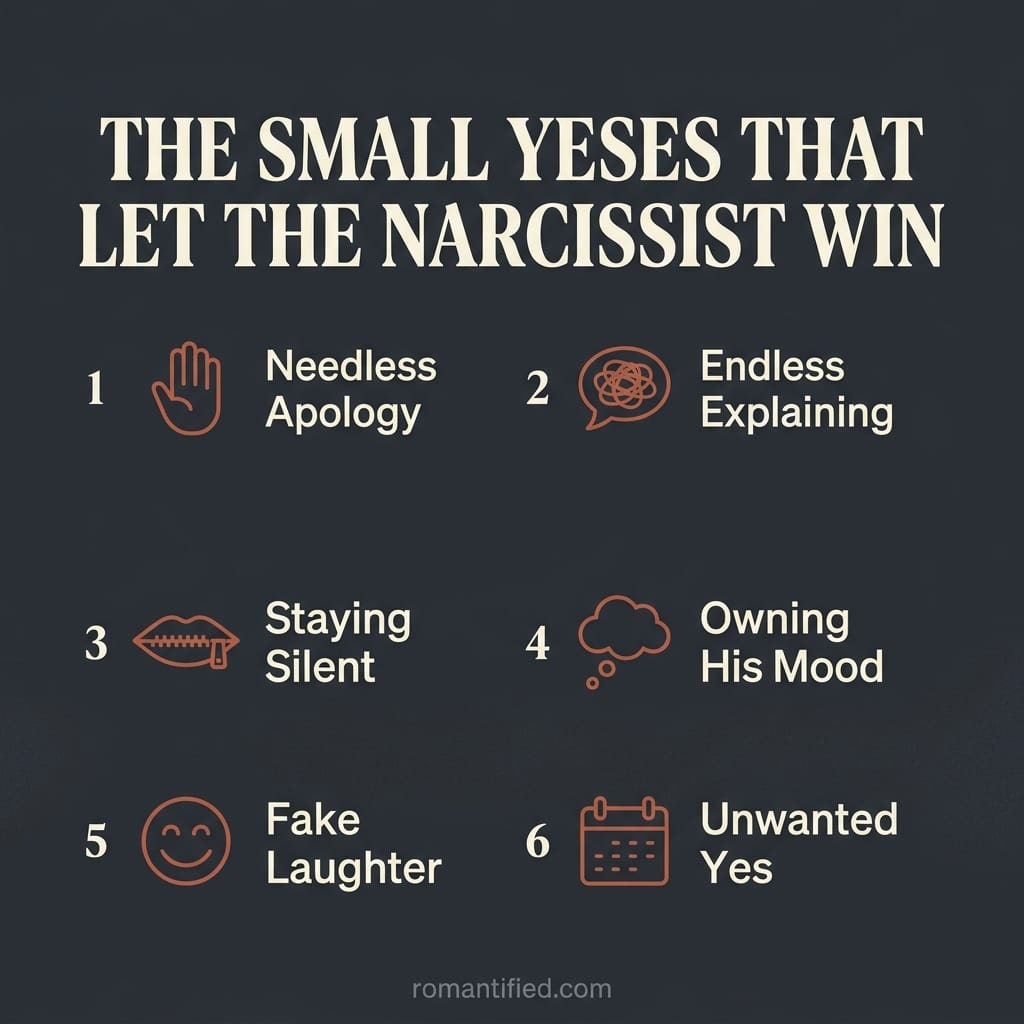
1Apologizing when you did nothing wrong
Time and time again this happens. Every time I open my emails, I see a message from one of my followers saying how sick they are of always apologizing even when they didn’t do a thing wrong. My reply is the same:
You’re playing into the narcissist’s hands. You say, “You know what? Maybe I was just a little too much today, and I am sorry for overreacting.”
Boom. Right there is where the narcissist feels as though they’ve won the jackpot, and inside they’re dancing. You just, yet again, made their behavior and problem your behavior and problem, and they’re going to keep doing this to you until you offer as many apologies as you can.
When the narcissist is at their most abusive, they aim it at their victims in order to get a reaction they’re looking for. It’s never specific; just any kind of defense, apology, tears, or slanging match to start.
Apologizing is like handing them some kind of trophy that says, “I never do anything wrong” on it. They will gloat, and agree that you were out of line just to make you feel that little bit worse.
I had a client tell me her ex actually said, “Thank you for finally admitting it,” after she apologized for something he started. She said it made her stomach turn.
As they declare their wounds to you, your guilt grows, and all because you’ve handed them something they don’t have the right to have. What they use this for is you.
The next time you step out of line in their books, they will raise ‘what you did wrong’ and make you admit that you tend to do these kinds of things. Don’t say you weren’t warned.
 See alsoWhy Narcissists Suddenly Change When You Are Almost Gone
2Explaining yourself when the narcissist acts like they don’t understand
The sneaky way a narcissist acts like they don’t understand… How many of you have been there, in the middle of their pseudo-confusion? I don’t understand what you’re saying. Run that by me again? I genuinely have no idea why you’re so upset. What are you talking about?
Over and over, and the frustration is real. You try to explain in a different way, while they continue to look at you quizzically. You then try another approach, but that only ends up making them ask you more and more questions.
You then explain your explanation, like it will somehow make a difference, but it gets you nowhere. In all of this, the narcissist knows what you’re talking about. They heard you the first time, and the time after that.
They’re simply enjoying watching you squirm and find new words because your confusion and overwhelm brings them a sense of satisfaction.
One woman told me she once explained the same hurt six different ways in one evening, and by the end she was apologising for even bringing it up.
 See also5 Passive Aggressive Tactics Narcissists Use That You'd Never Recognize As Abuse
The trap is that the narcissist doesn’t actually want you to be clearer; they want you to get tangled up in your words so that you forget what day it is and who you even are.
They want you to then think you weren’t even wronged, or that it doesn’t matter, so you stop talking.
The moment you start to lose is the moment you start to justify why you feel how you feel, and when they take your words and feelings and purposely shuffle them up just to make you feel how you end up feeling.
This happens frequently, and is a real game changer for the narcissist who is only out to win at all times.
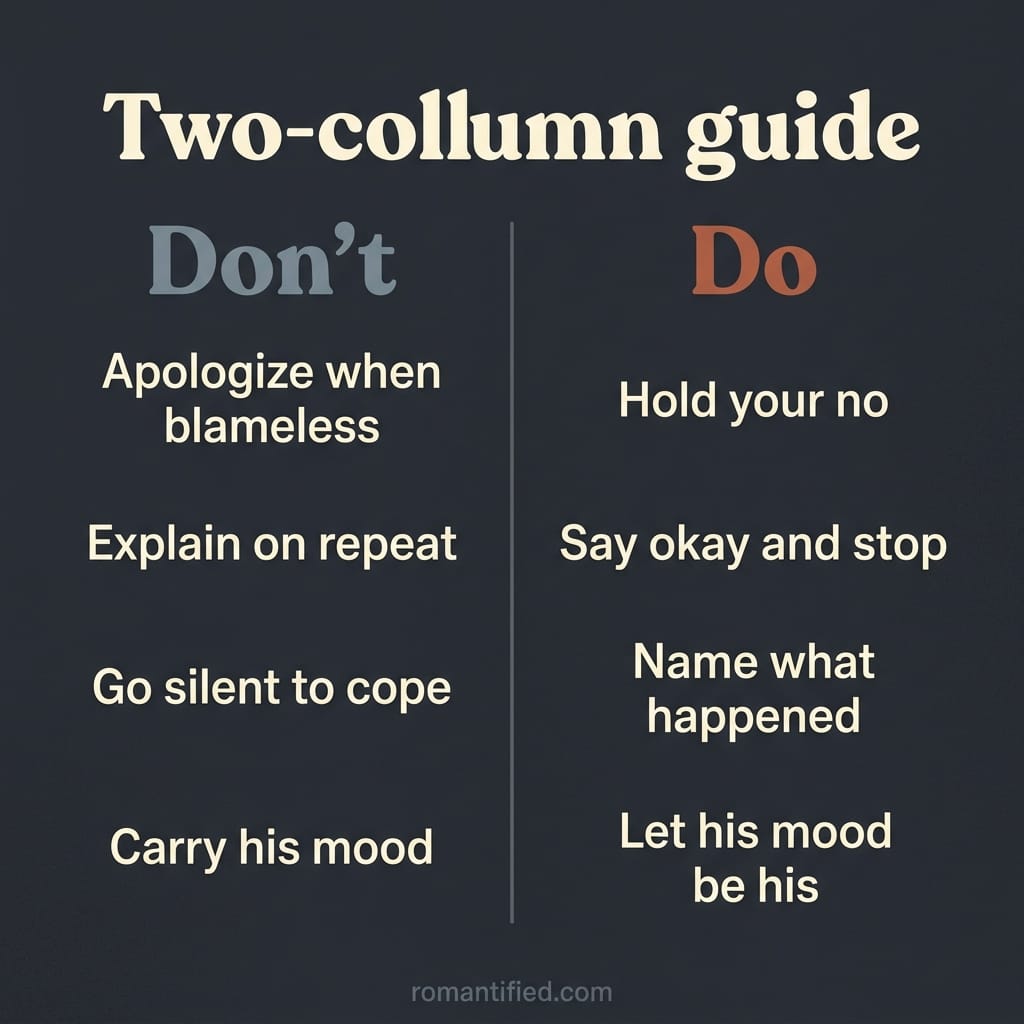
3Staying quiet to keep the peace
This is all victims at some point or another. They stay quiet to keep the peace because they’ve learned speaking up doesn’t keep them small and invisible.
When they feel small and invisible the feel less likely to gain attention that will inevitably cause the narcissist in their life to criticize, blame, shame or mock. And so, you bite your tongue.
You hold back from saying what you want to say, and you tell yourself, “This argument just isn’t worth it.” You already know the argument would end up rolling around in circles, so why even bother? The thing with silence is, it acts like compliance.
Think about the people who really know what the narcissist is like, but they don’t speak up about it. Those people stay quiet because they don’t want to invite any trouble into their lives, so they keep the peace by keeping silent.
 See alsoNarcissists Are Incapable Of Giving You These Things No Matter How Long You Wait
It also tells the narcissist that their behavior is acceptable, because nobody is contesting it. It’s the same for you. If you aren’t speaking, you’re tolerating. If you’re tolerating, the narcissist is pushing.
You’re showing them that they can get away with whatever they want to, because you’ll never challenge them.
I’ve heard narcissists say it out loud too, things like, “See? Even you know I’m right.” Your silence gets used as evidence against you. Neat trick, isn’t it?
Your silence gives the narcissist permission to be the abuser, and it’s you who ends up suffering as a result. They’re going to win this way, every time they’re offered your refusal of words. Don’t let that happen.
4Taking responsibility for their mood
How many of you sit there trying to figure out what you did that was so bad? You ask them what’s wrong, and the narcissist replies, “Nothing.”
Before you’ve figured it all out, you tiptoe around them, not wanting to make matters any worse than they already are. You adjust the way you speak to them, and your energy so it isn’t too much or too little. Why? So you don’t affect their temperature.
I had a woman tell me she could hear the front door open and know from the weight of the footsteps whether she was in for a quiet night or hours of icy silence.
You were trained at some point in your relationship to believe that you were responsible for their moods, and that if they were in a terrible mood, it was because of something you’d done.
If they were cold and distant, it had to be because you did something they didn’t like, and that’s no way to live.
You wanted their reaction to be as little as possible, and so you got really good at managing them this way, making sure you knew when and how quickly to apply damage control. So now, every time they are in a bad mood, you take it on and blame yourself.
No narcissist will lose playing that game.

5Here’s the thing…
I know that on the outside, none of these things will feel like you’re directly losing, and that’s the point the narcissist is trying to get. They don’t want to act so overtly that you figure them out and end up exposing them.
This is about the more subtle things in life you do every day to give the narcissist those small wins. Each time you do, the narcissist keeps score and uses them to remind you that you never do anything right, or that you’re never good enough.
 See alsoBefore The Narcissist Says It's Over They Do These 5 Things First
One tiny yes here, another there, and suddenly you’re playing a game where the rules keep changing and only they know the score.
Is that how you want to live?
6Laughing along when the joke is actually about you
You know the kind of moment I mean. You’re at dinner, everyone’s a couple of drinks in, and they lean back with that smile and go, “Oh yeah, she can’t even read a map, honestly, it’s a miracle she found the restaurant.”
Everyone chuckles. So you chuckle too. Because what else are you going to do? Sit there stone faced and be labelled the person who can’t take a joke?
That laugh, that tiny, forced little laugh, is a yes. You’ve just told them the material works. You’ve told the whole table it’s fine. And later, when you say, “That thing you said at dinner really hurt,” guess what comes back at you?
“You were laughing! You thought it was funny at the time.”
And now you’re the one rewriting history in your own head, wondering if maybe you did find it funny. You didn’t. You were surviving the moment. There’s a huge difference between being in on a joke and being the punchline of one.

7Saying yes to plans you never wanted to agree to
You said yes, but only because saying no felt like too much of a battle to face that night. The dinner with their friends you couldn’t stand. The weekend away when you were exhausted. The family thing where you knew you’d be picked apart by the end of dessert.
 See also5 Creepy Things Every Narcissist Hides Somewhere in Their House
And there you are, agreeing. Smiling. Getting ready.
Every yes like this is a little handover. You’re telling the narcissist that your no can be worn down. That if they push, sigh, or guilt trip enough, you’ll fold.
I’ve had people tell me, “It was easier to just go than deal with the silent treatment for three days after.” I get it. I really do. But easier now often means heavier later.
Your yes should mean something. It should come from you actually wanting the thing, not from wanting to avoid the punishment attached to saying no.
So next time your gut is screaming no and your mouth is preparing a yes, pause. Just for a second. That pause is where you start getting yourself back.