
A narcissist is so good at keeping their masks on. They will ensure it's in the proper place before any event, occasion, or time they're looking to manipulate the people around them.
What they can't do is fake their way through the following three questions. It's impossible. While they're faking love, faking charm, faking concern, they are absolutely unable to fake the following, and you may want to stick around to find out what those questions are.
After all, we love it when the truth prevails!
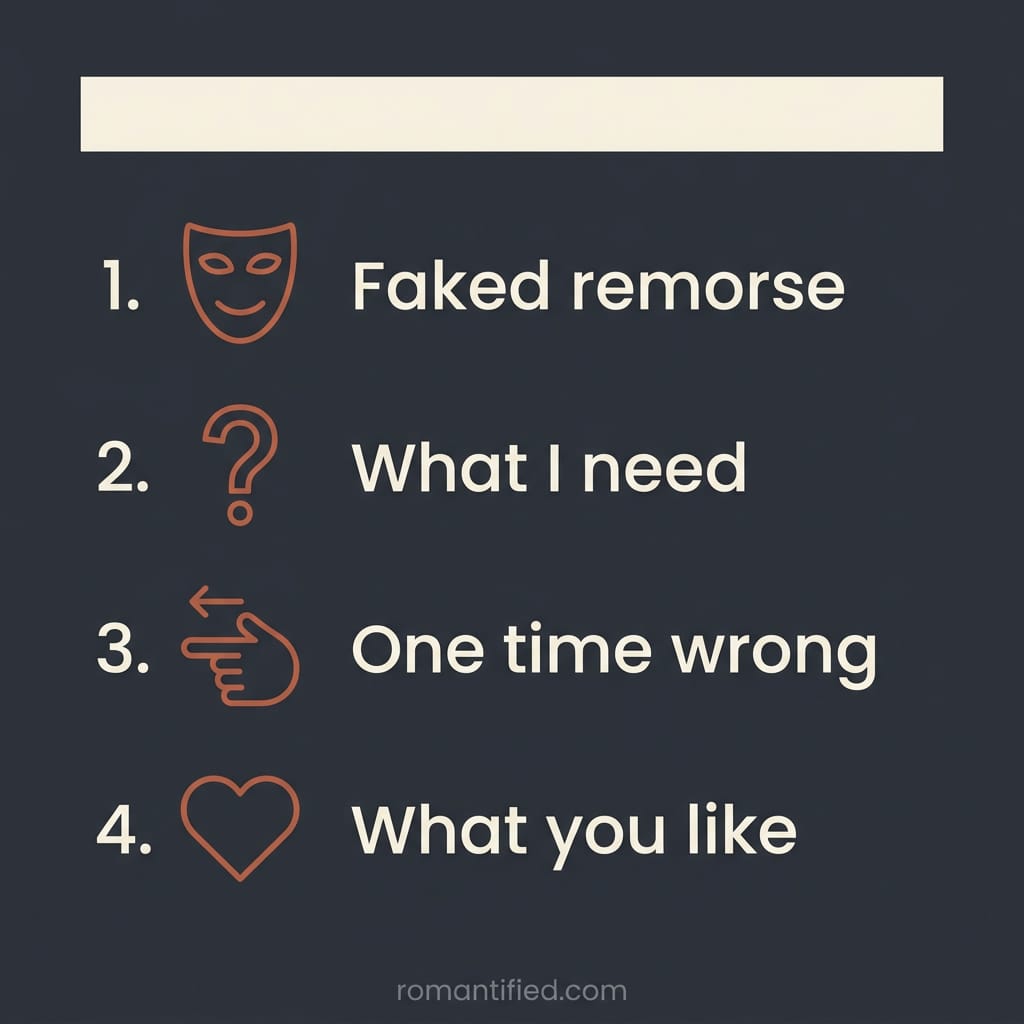
1 A narcissist is able to actually fake remorse
Before we get started, it's important to me to highlight this one fact about narcissists. Faking so much means they get away with the pretense of being someone that they aren't. People believe what they see and who they present as, and that's quite worrying when you have someone who is looking to score points to add to their image all the time.
Remorse is the one thing that strikes a lot of people with surprise when I speak to them about all the things a narcissist can fake.
Really? Remorse? Are you sure? That seems beyond even them!
You'd think so, but never put anything past a narcissist, because they will fake whatever they can get away with faking.
Think about it. You've definitely heard these lines before:
I am so sorry. I don't know what washed over me. I love you more than anything. I'd never do anything to hurt you. You know that's not my style.
This isn't remorse, even though you probably think it is.
Instead, see it for the truth: it's damage control. The narcissist is trying to gloss over a moment that they treated you unfairly, and they're doing it by giving you some kind of pacifying comment that will leave you thinking, "They aren't a bad person after all."

They are bad, that will never change.
If they were really remorseful, they would change their behavior, and not just repeat those same habits while still maintaining some weak, flimsy apology. You can't just get away with doing what you want and then say sorry at the end of it, can you? It's not fair, and it shows you to be someone who feels they can hurt people and never be held accountable.
That's not you, but that is a narcissist. They love it, which is why they fake it so well.
The words come out, but any meaning behind it all is lost, and that's not a real apology.
As convincing as they can be here, I want to move on to those 3 questions that you can ask the narcissist that they can't fake their way out of.
See also 5 Creepy Things Every Narcissist Hides Somewhere in Their House2 Question 1: "Can you tell me what I need at this moment?"
Be careful here because it's not about asking the narcissist what they think you need, it's asking them to tell you what you need. You want to hear it out loud, and you aren't willing to let them get away with, well, getting away with answering.
This question highlights how well the narcissist knows you, and how well they can read you in that moment, which for them in their own egotistical bubble, is seemingly impossible.
Here is where a narcissist will stumble. Not because they need time to think about it fully so they can answer and honor you, but because they are trying to worm their way out of it.
They don't know.
The deflection can come:
Calm down. Look, you're being dramatic. Why do you do this?
They can turn it right around onto you:
I just need you to stop being this needy. You're suffocating me.

Then, they could be generic:
You probably just need some space, or a hug, or a little time to process your day.
Yeah, right.
A narcissist isn't going to pay attention to who you really are, because they don't want to, they don't care, and they genuinely don't know.
The only thing you have done for them is be a supporting person in their life, playing that role from the moment you met. That means you've not had the time to lead your own life, and for you, that looks like missing out on an awful lot of self-care.
Asking them to tell you what you need will fall on deaf ears and the narcissist will be unable to even know where to start.

3 Question 2: "Without using the word 'but,' can you tell me one time you were wrong?"
But, but, but…
That's what the narcissist will immediately be tempted to respond with, but instead, you're more likely to hear:
Fine, I was wrong, but I specifically remember you pushing me until you got what you wanted. Sure, okay, I might have handled that the wrong way, but it wouldn't have happened if you…
That little but falls in there, doesn't it? There has to be some way the narcissist flips it around onto you, and that's right where they do it. It would be far easier if these people just stood up and held up their hands, saying they were sorry and fully to blame.
That doesn't happen. If it did, what comes along with that is the awareness that they messed up in the first instance, and that they actually have something to apologize for. They caused harm, and they're admitting to it.
Nope. Not on their watch.

They will be able to fake their way out of any problem, but a narcissist struggles when you are direct with them like this, and they won't sit with the question well.
Omitting the 'but' means they don't have that shield to hide behind, and that makes it hard for them to stand in front of you, weak and wide open.

4 Question 3: "What do you even like about me?"
Quiet as this one is, I can't cut out the last question, as I think it packs the strongest punch.
You're asking the narcissist what they like about you? You don't want stutters or mumbles. You don't want excuses, or uncertainty. You want straight answers that you stand there waiting for, and the narcissist doesn't know what to say or do.
The truth is, this is right where you find them at their weakest. They should be able to reach out and answer you without hesitation, and instead all you get is:
Everything. What's not to like? You know you're amazing. I love you. You're just great to have around. You're patient and loyal.
See also THIS is What Makes NarcissistsYou'd be surprised how many people would see value in those responses, but I want you to think a little differently.

Any quality they see in you that helps them or makes them look good will be spoken about, but you won't be. That's because the narcissist doesn't love you for who you are, but rather what you can offer them.
That's not right at all, yet it's what many victims take for authenticity.
When you're asking this question and you see the crack in the narcissist's mask appear, it's there for a reason.