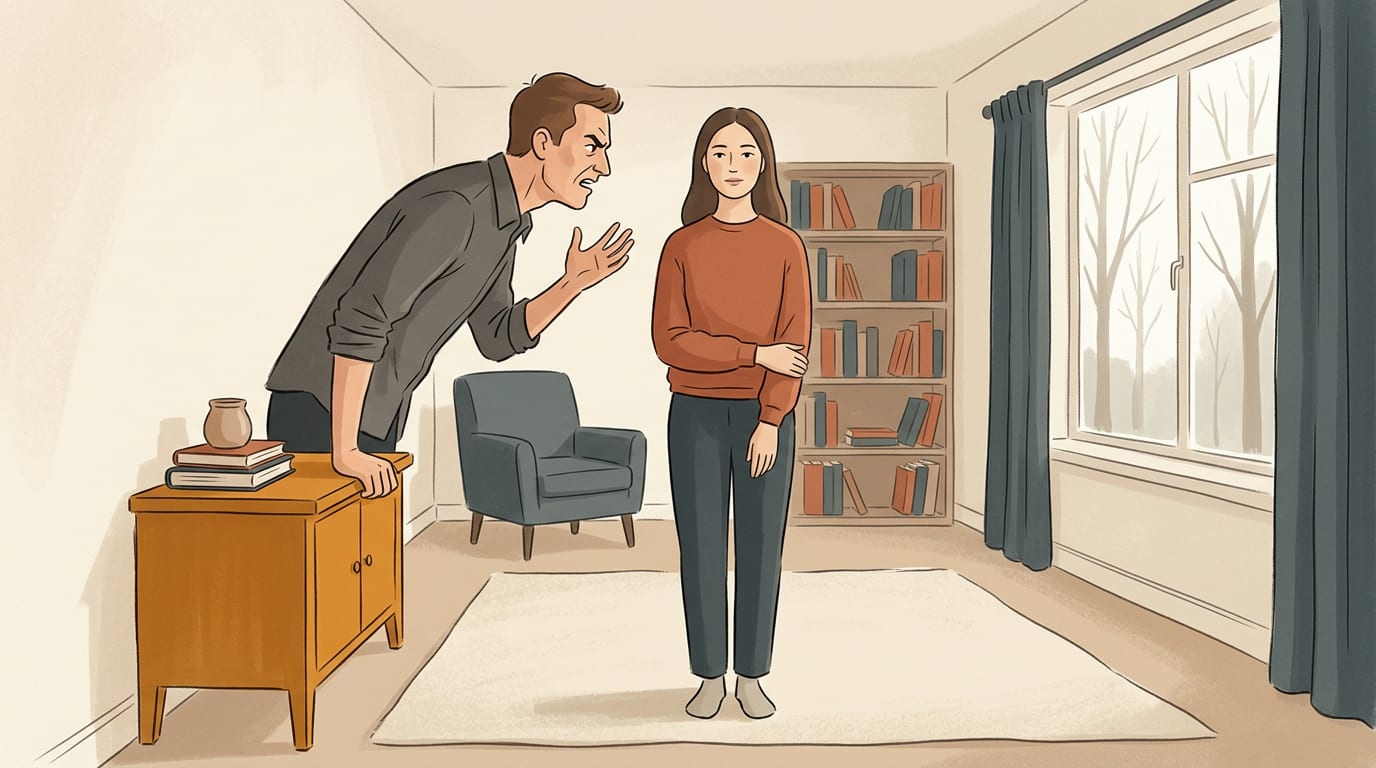
'Normal' is what you experience regularly, and is a word that is friends with 'familiar.'
It can be familiar and normal for someone to be in a narcissistic relationship, and assure everything within that dynamic to be fine, because it's normal to you.
But here's the thing; nothing about narcissistic relationships are normal, and I can't go another day without reminding you of the 5 main things you might think are okay, but aren't.
Don't be fooled into believing that toxicity is something every couple must own and display. In order to do that, you must know what toxicity really looks like.
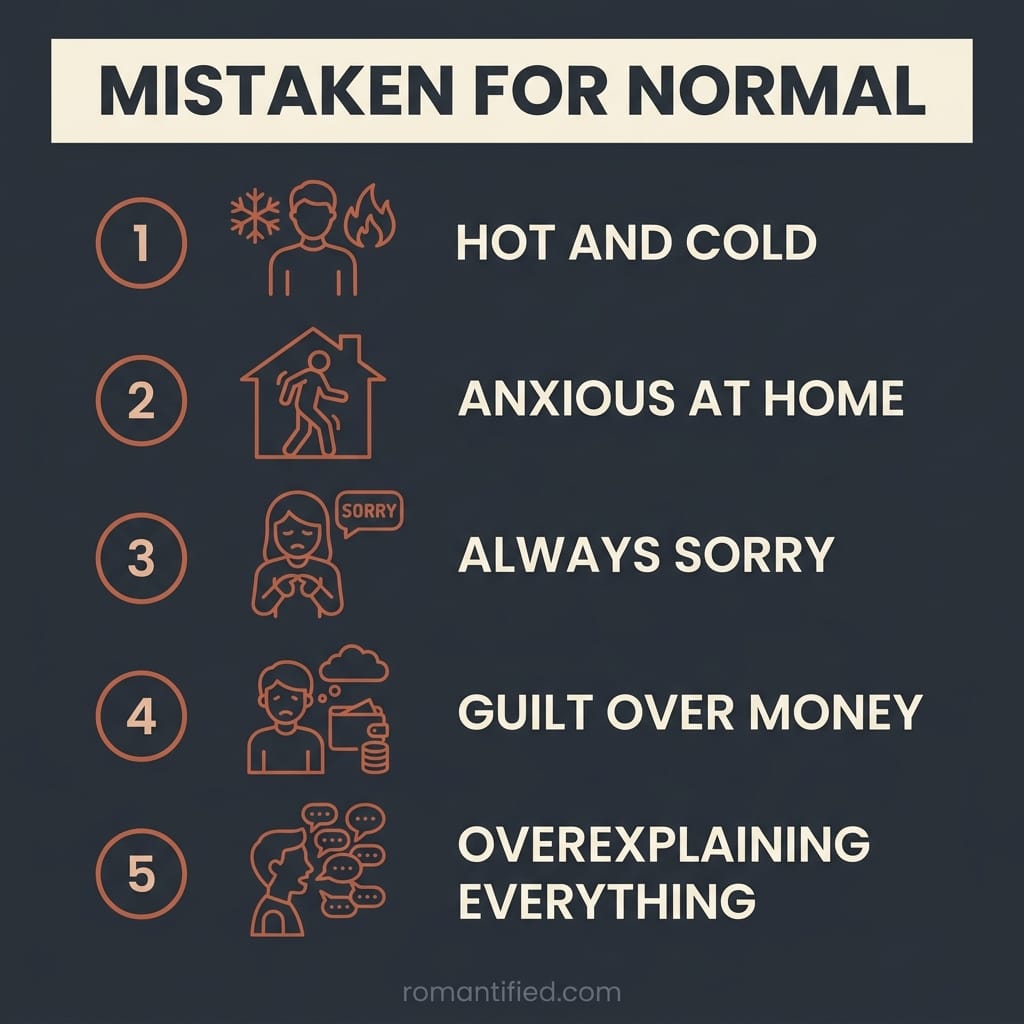
1Love one minute, hate the next
The hot and cold tap keeps pouring out, and you never know which temperature the water will be until it comes at you.
Sometimes, the narcissist is kind and caring, other times, they're yelling at you, telling you everything is your fault and that you're a terrible, needy, annoying person.
No two days are the same, and it's a level of consistency that keeps victims feeling as though they are walking on eggshells.
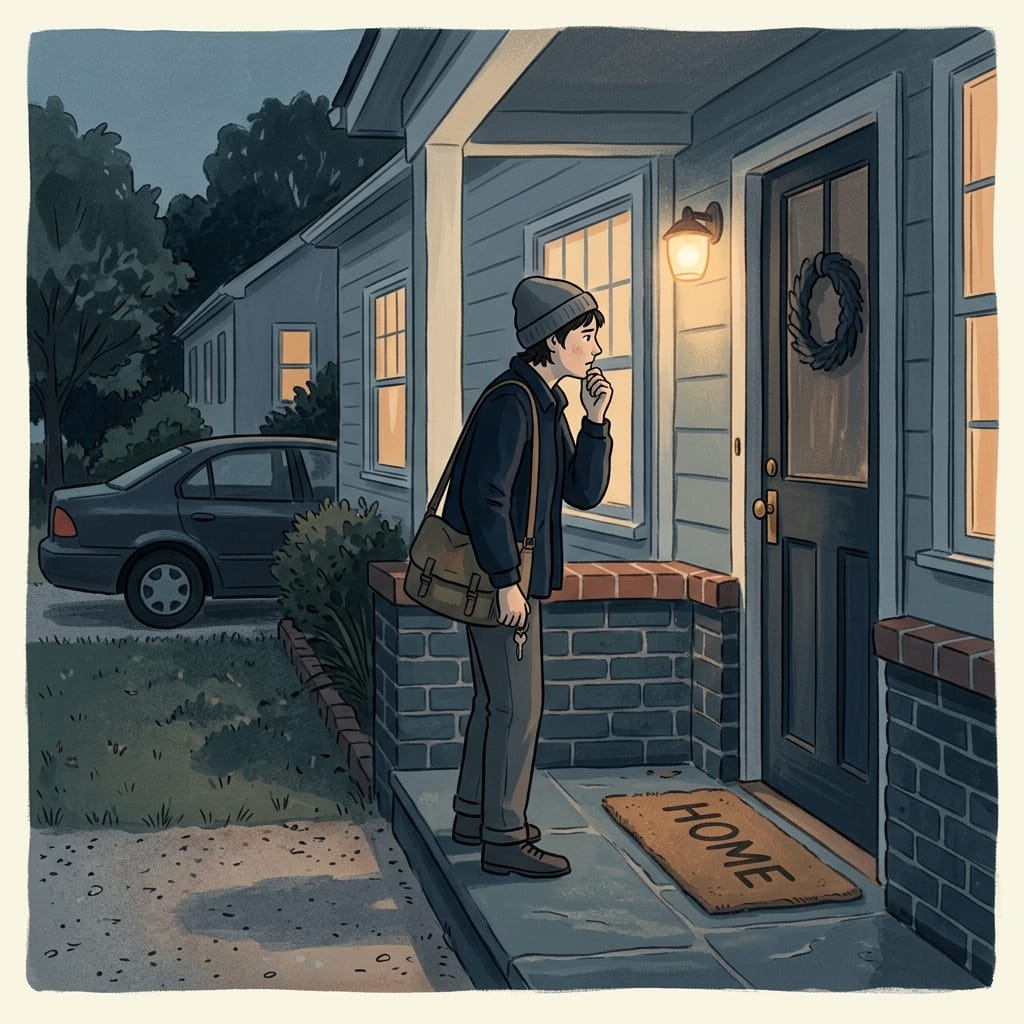
You come home from work, the narcissist's car is in the drive, and your stomach drops.
Are they happy, or angry?
You hear the key turn in the door, and your heart quickens. Are they going to slam it, or are they going to walk in with flowers?
You think this is a normal relationship because it's one you've been in for a number of years now, but there's nothing normal about someone whose moods you have to manage, and whose behavior leaves you wondering what they will say or do to make or break your day.
Heartbreakingly for many, they look for these contrasting moods in someone because it's all they've ever known.
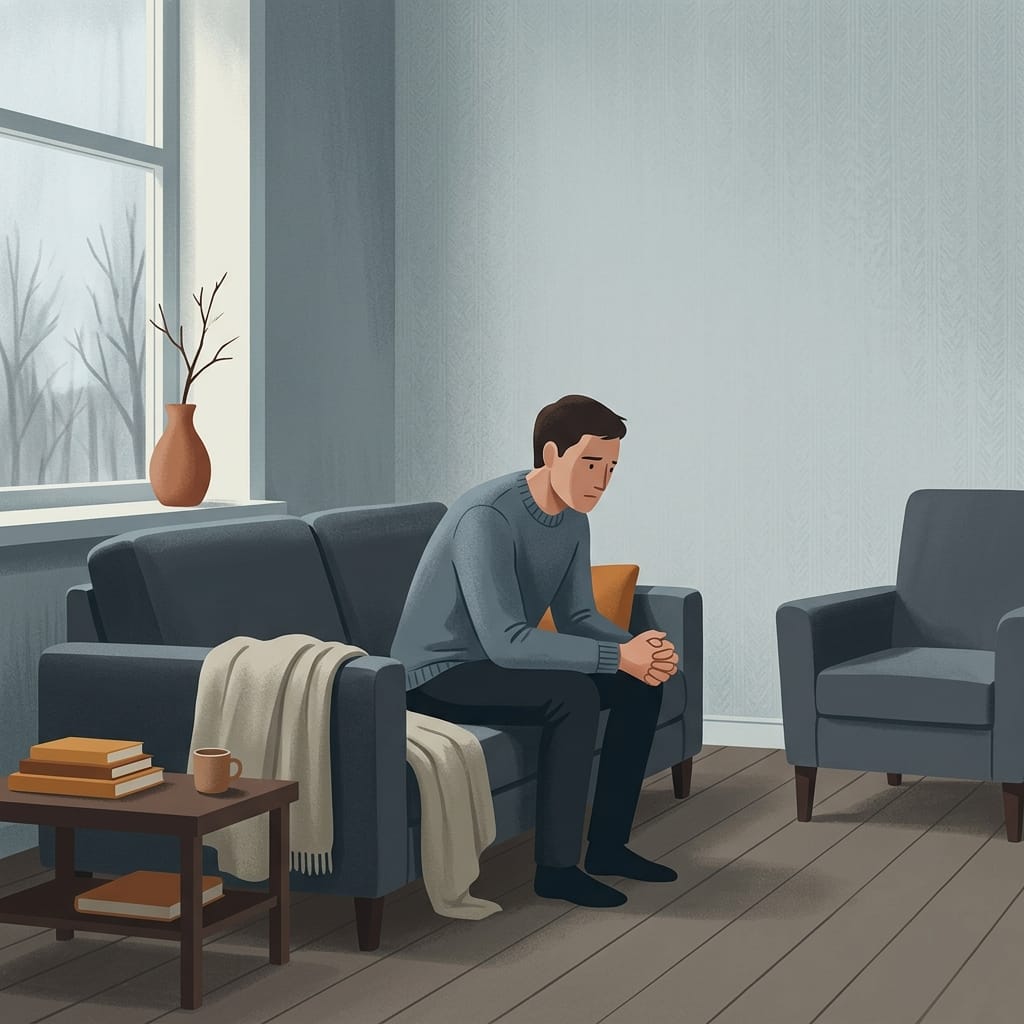
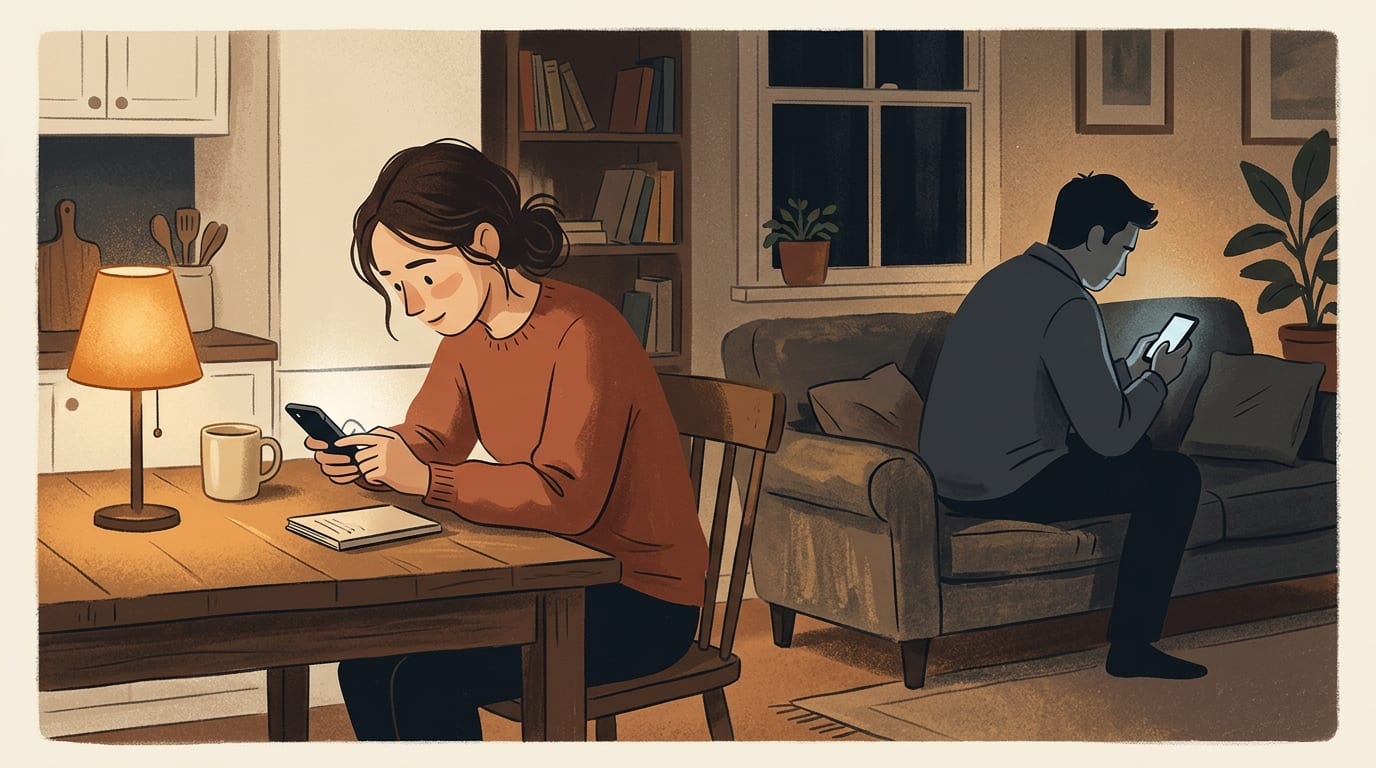
2Feeling anxious all the time in your own home
 See alsoThe Narcissist Was Looking For Your Replacement While You Were Still Fighting For The Relationship
Your home is meant to be your sacred place of safety and security. It's the place you go to at the end of a long day. You curl up sick there. You decorate there. You celebrate there.
Home should not be where you sit and feel pain day after day. It's where all kinds of memories are made, but none of them should include toxicity or manipulation.
When a person feels anxious in their own home, there's usually a source outside of themselves that's curling that anxiety, and if you're in an abusive relationship, I want it to be the place you first look.
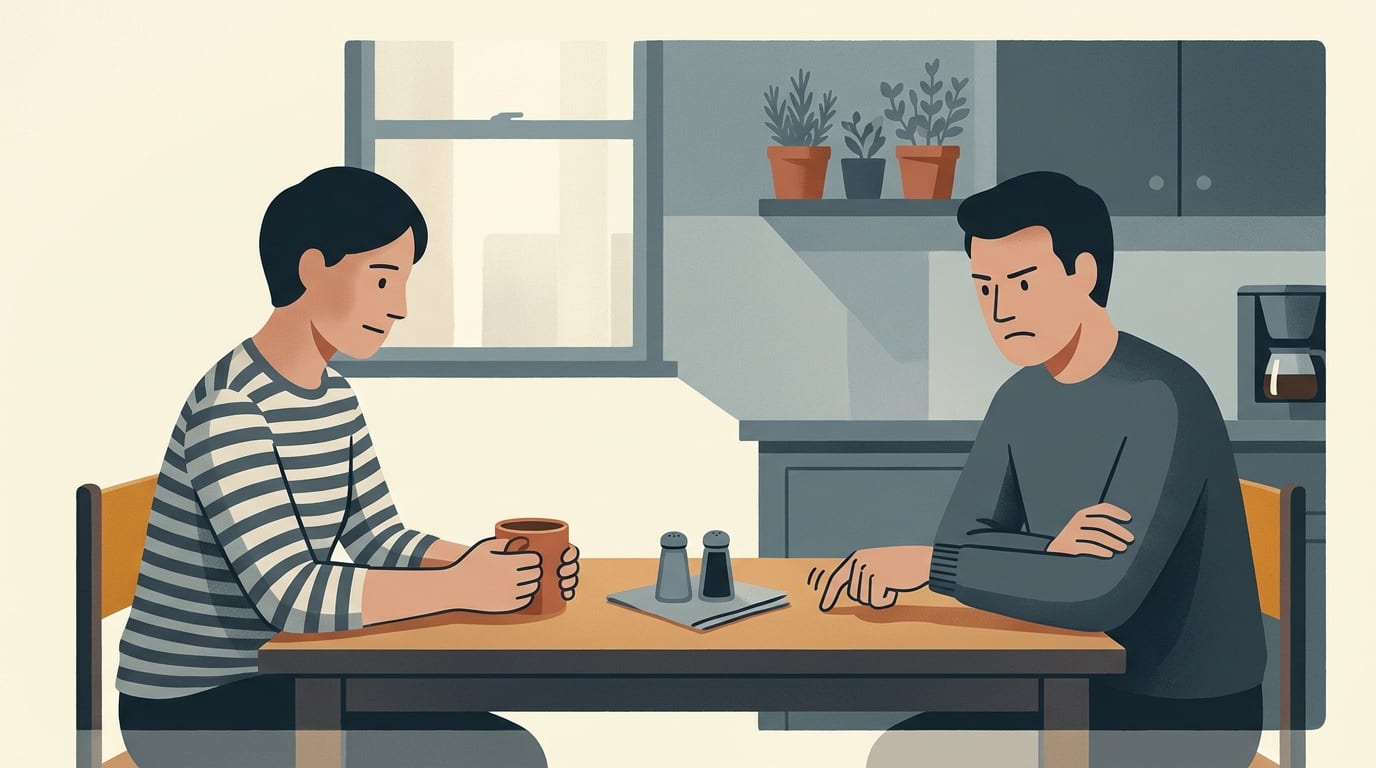
Anxiety is caused by the unknown. What will happen? What did I do wrong? Why are they silent? What's so bad about me? What mood will they wake up in?
That's just the start; it can get so much worse, and maybe it has for you.
Your anxiety comes from being forced into a state of fight or flight that the narcissist is fuelling.
 See alsoIf You've Ever Heard Yourself Saying These Things Just to Keep the Peace, Your Relationship May Be More Abusive Than You Think
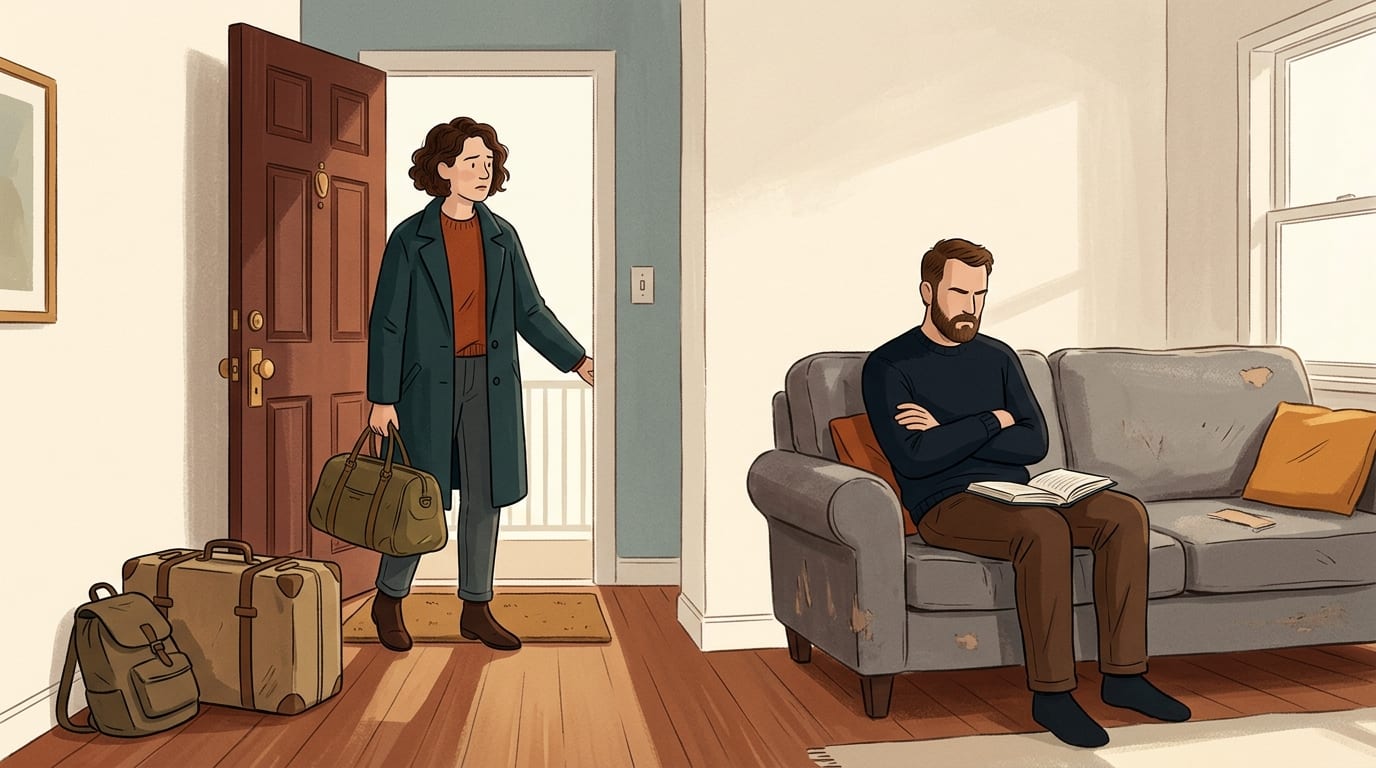
3Constantly apologizing
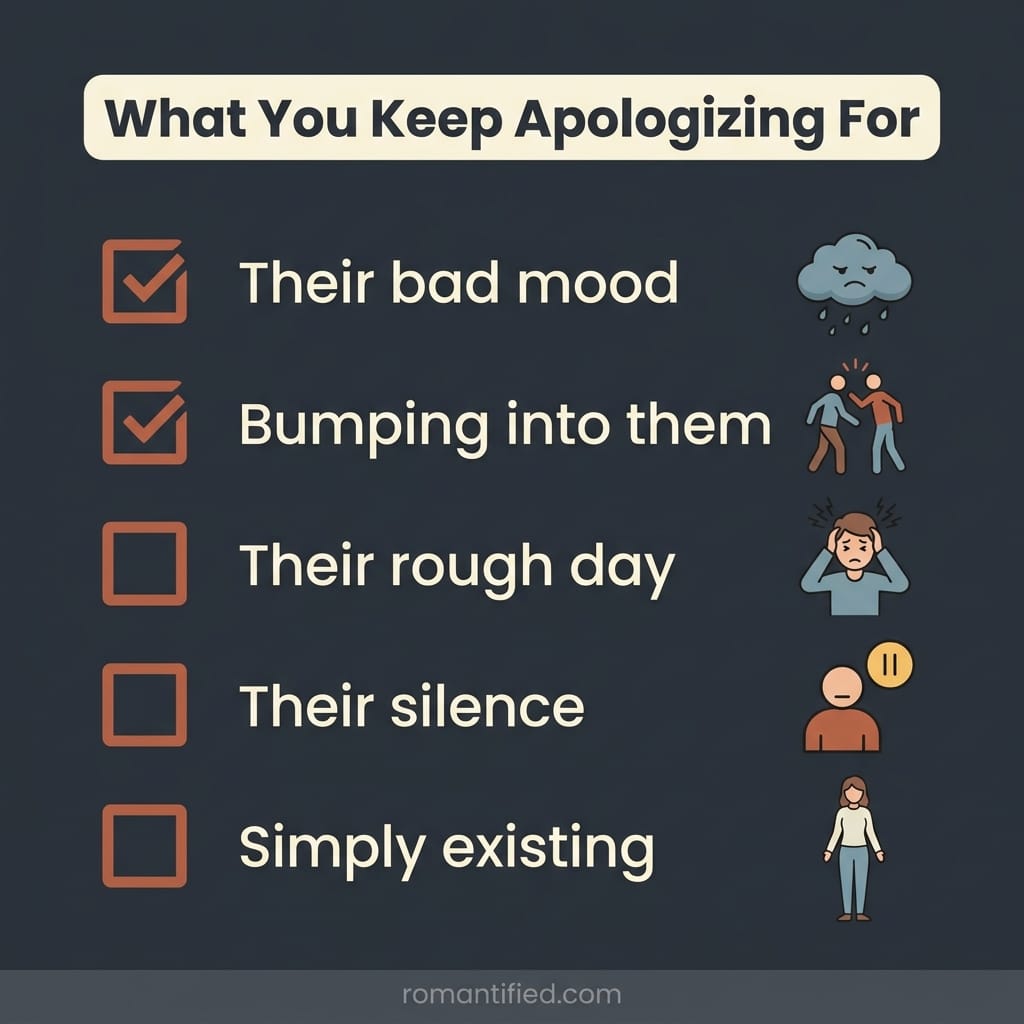
"Sorry."
One word, yet used so often by people in narcissistic relationships because its seen as the word to fix many things.
A bad mood? Sorry. You bumped into them? Sorry. They had a bad day? Sorry.
You're always the one who is sorry, and you think that by saying it often, you'll be excused and it'll make everything right again.
The narcissist will come to expect you to keep apologizing, and with that comes your assumption that you keep having things to be sorry for, but you don't.
This dynamic is hard to break, even once the relationship is over. I know many ex-victims of narcissistic abuse, and they still say they're sorry for absolutely no reason (to me).
They, however, see it as a default word they go to, to keep the peace and placate people.
It works, that's why it's so commonly used.
But you have nothing to say you're sorry for. When this word is normal to you, you should be asking yourself why that is instead of merely accepting it to be there.
 See alsoA Narcissist Would Rather Lose You Than Ever Admit They Were Wrong
The only reason you use it a lot is because someone will have once given you a good enough reason to believe you had to.
If you're still with that person, it's time to ask yourself some questions.
4Not spending a lot of money in case the narcissist gets mad
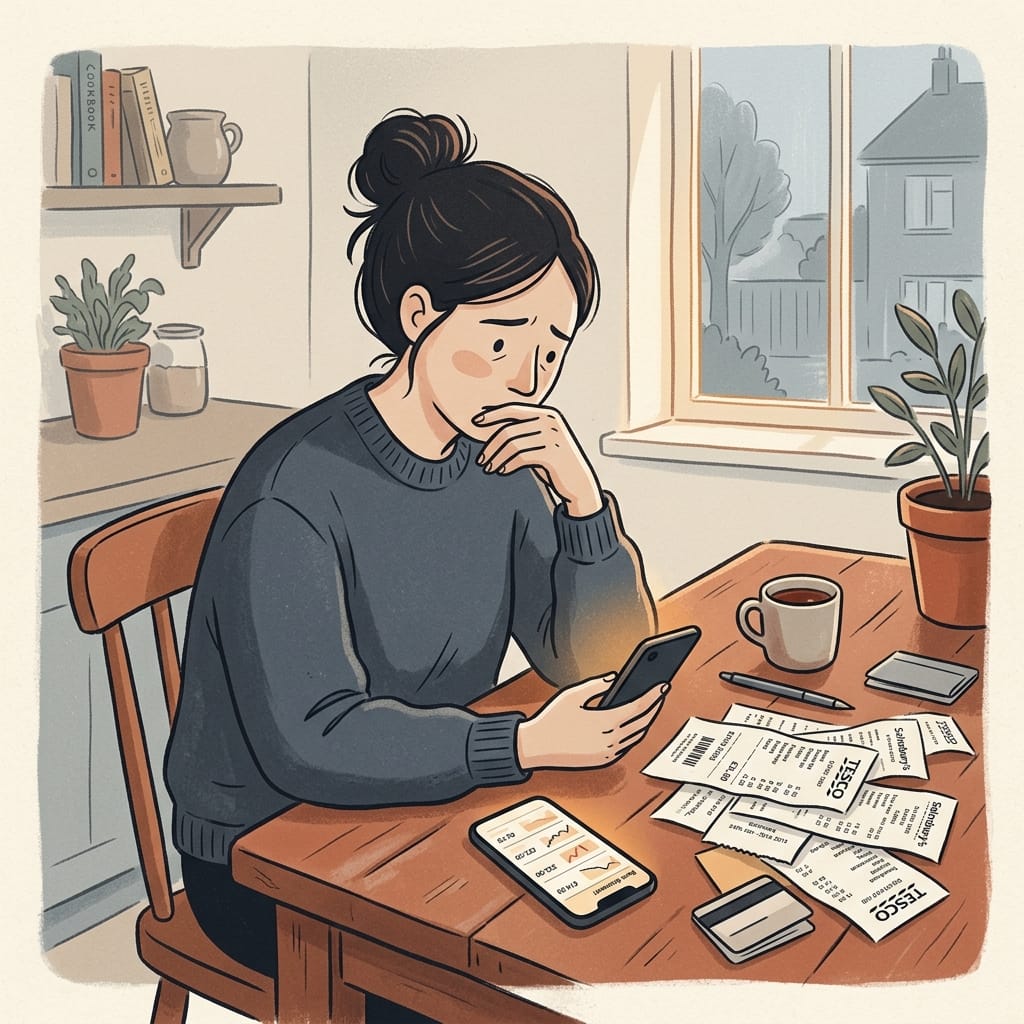
This topic is hard, right? How many of you right now are thinking about how you treat money?
You constantly check your bank account because you want to make sure you're not spending too much, and you also want to be able to justify certain expenditures you've made.
The sanitary products. The shampoo. The milk. Everything needs to come with a reason, and to be honest with you, no normal relationship is like this.
If it's normal for you, it's because you've been made to believe anything you want to or need has to come with an explanation.
"I ran out of shampoo, and I had to dash out and get some so if you see a purchase at the store, it's just for that and those steaks you said you wanted."
Who does this?
People who have got a track record of feeling guilty for buying the essentials. It's not as if you've gone out and treated yourself to a brand new pair of designer shoes, is it?
You might want to check in with yourself if this sounds like you, because nobody should be making you feel as though spending money is a bad thing.
If the reason is that you don't want the narcissist mad at you, then I ask you again to see this not as a worry, but as a real red flag.
You're living under a strong form of control, and I bet that control is one-way, too.
The narcissist buys what they want, when they want, right?
Yeah, I thought so.
 See also10 Disgusting Habits Every Narcissist Has That They Think Are Normal
5Overexplaining

There's explaining, then there's overexplaining, and a narcissist isn't really deserving of either.
However…
…They get it frequently.
Overexplaining comes from the need to want to sell your case to someone. It isn't enough to just say you can't make it, or that you're sorry you broke the vase.
"I was walking into the kitchen with the plates and my elbow must have caught it and it fell straight down. I tried to catch it but it meant dropping the plates and I didn't want to break them, so…"
You see?
All this overexplaining does is arm the narcissist with more reasons to be mad at you.
Nobody who is talking to an emotionally regulated partner would need to do this, yet here you are, making it a normal part of your day.
 See alsoIf You Don’t Feel Ready to Leave Your Abusive Relationship Yet, But You Know You Can’t Keep Living Like This Either, THESE Are 6 Things That Help You Get Started
It's not your fault. You want to please, you want to be liked, you want to be heard, and you want to be understood.
You think, "The more I say, the more I will be understood."
The narcissist thinks, "Look how desperate this person is around me."
You serve them with your words. You tell them they're important, and they don't stop you.
Come on, folks. That isn't normal.
Realizing just how abnormal some habits and behaviors are really should shine a light on the lengths the narcissist is going to, to abuse you.