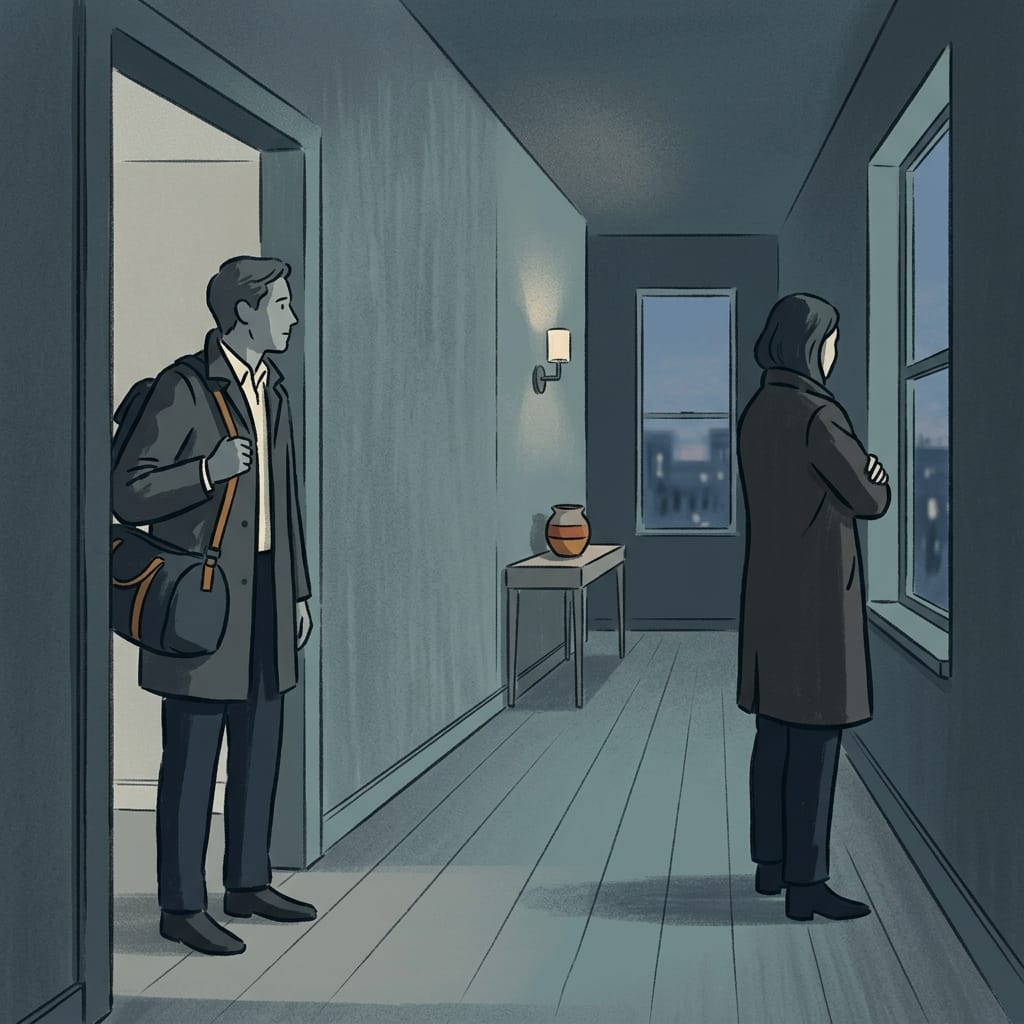
You could stand inches from the narcissist, with all your packed bags, crying to the point where your eyes are puffy. What do you think they'd do? In truth, they'd barely flinch, let alone speak a single word. If they do, it'll be, "Fine. Just go."
They don't want to hold you back if it means they get to be right again, and I don't want you to underestimate what this means. In fact, here's where I want you to pay the most attention.
Cold, isn't it? Four little words that tell you everything about what they actually valued. Not you. Not the years. Just being right in the moment you left.
1Love doesn't work the way you'd hope it would
Most people, healthy people, don't want to hurt the people they love. If they do, they're usually pretty mortified about it, and will do anything they can to fix it. There's this pull to the person they love, because they care about making the situation better than it was before.
I was wrong. I'm so sorry. I love you. I want to make it better. It's uncomfortable sometimes, especially when you have to admit that you're wrong, or that you caused pain. There is no pull like that with a narcissist.
They don't have any kind of urge to make anything better because, well, why would they? Life is boring when everything is running smoothly, and so they choose drama instead, every single time.
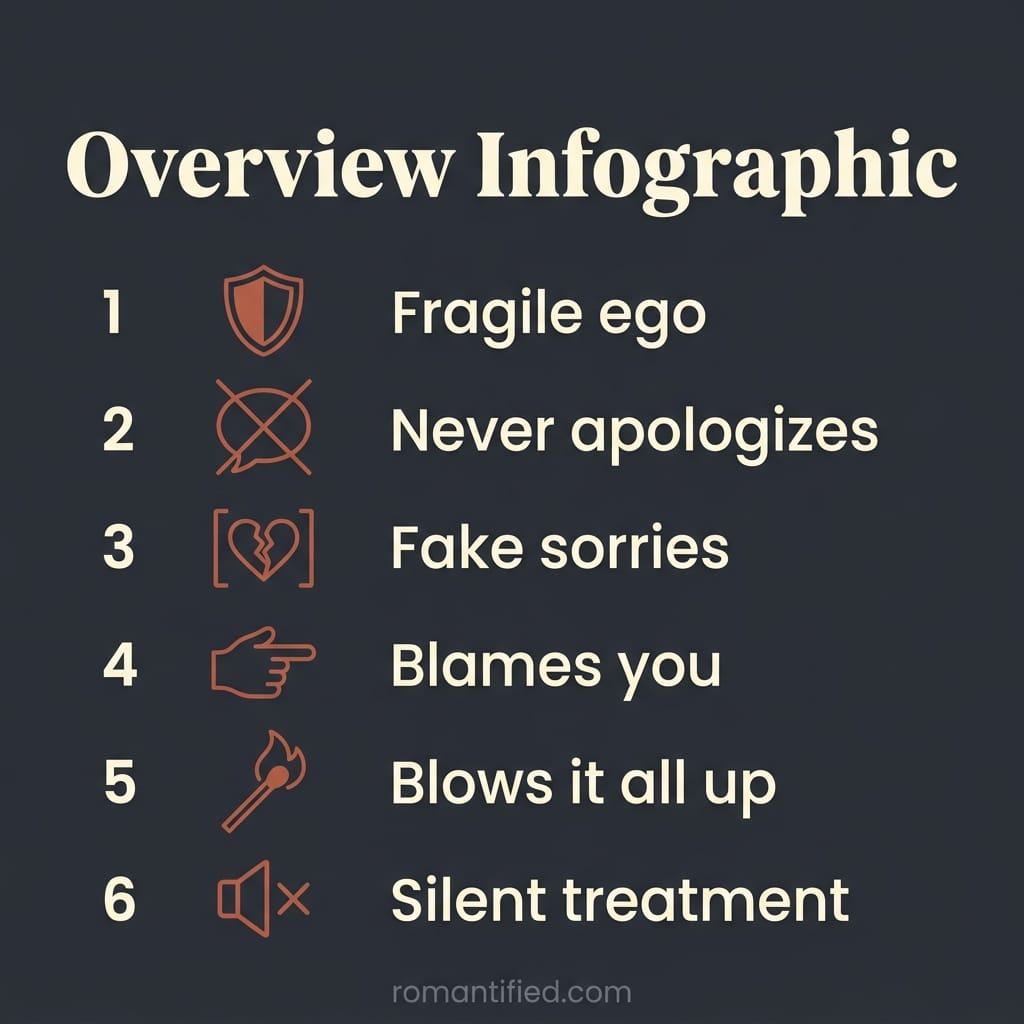
There is a wall a narcissist puts up when they are wrong about something, and rather than admit to any of it, they choose to hide their fragile ego behind it in the hope you and your memory of their mistake will go away.
If the narcissist were to admit fault, that entire wall would come crashing down, so they want to do all they can to protect it, even if that means losing you along the way. Nothing to them is more important than their ego, and that's the sad reality.
I had a client tell me she waited nine years for one real apology. What she got instead was silence, a slammed door, and a new girlfriend within the month.
2There are apologies you hear that won't be apologies at all
Why do you keep twisting everything I say? Here we go again. There is always this drama with you, isn't there? The narcissist is never keen to want to resolve any issues.
They see them as opportunities to make these snide comments aimed at you, when they could just in fact have a conversation that's challenging for an outcome of peace.
Apologies won't sound like apologies, they will sound like further insults, and that's where the narcissist wants to extend any kind of drama while trying to be seen to be doing the right thing. It'll catch you off guard, but let me assure you:
 See also10 Signs You're Too Smart For The Narcissist To Manipulate
One of you wants a quiet life, and the other wants to always win. The narcissist wants to win, even if they lose everything else in the process. If you were to turn around and say, "You know what?
Just forget about it," and walk away, that's right where the narcissist, even as you walk off, feels glad that it ended this way. They scored a point, and as they stand there alone, that point is worth far more than you will ever be valued at.
I know it hurts to even think about it. How can anyone start to wrap their head around just how toxic and deluded the narcissist is? I don't say these things lightly, in fact, I just want to be honest.
Knowing these facts at least means you're not imagining them, and you're very much not alone.
Think about how upside down that is. Someone would rather score an invisible point in an empty room than sit across from you and say, plainly, that they messed up.
 See also5 Passive Aggressive Tactics Narcissists Use That You'd Never Recognize As Abuse
3Losing you comes easily for the narcissist
I hate to even write about this, because the last thing I want to do is hurt your feelings. I believe if a person is armed with the truth, they cannot dodge that truth. The narcissist doesn't mind losing you, in fact, it comes easily for them.
Before you go, they're already imagining life without you, and thinking of how they can replace the supply you brought to their table on a daily basis.
It's not because you are a person who doesn't matter but it's because you asking that they own up to their mistakes means you're challenging them, and the narcissist will see that as unfair. I know it isn't, and you know it isn't.
You're seen as a threat to them, and anybody who is a threat has to be eventually discarded. There's nothing fair about it, but all the while you're living in their bubble doing everything and saying everything they want you to do and say, you're ticking their boxes.
What you said really hurt me. This is the very type of phrase where the narcissist will feel attacked, but this is only in their head.
Fighting back, going cold, walking away; whatever it is the narcissist chooses to do, it will be to save their image and uphold their fragile ego. They want to end it because it feels better than you asking them to be wrong out loud.
And they'll rewrite the whole ending too. By next week the story becomes, "They just walked out on me, no warning." You were the villain before the door even shut.
 See also2 Shocking Signs You're Being Groomed By A Narcissist
4Any apology you get was fake, fake, fake
The few times you'd get an apology from the narcissist will sound as though they really mean it. After that, those apologies will slip away, losing their meaning each and every time.
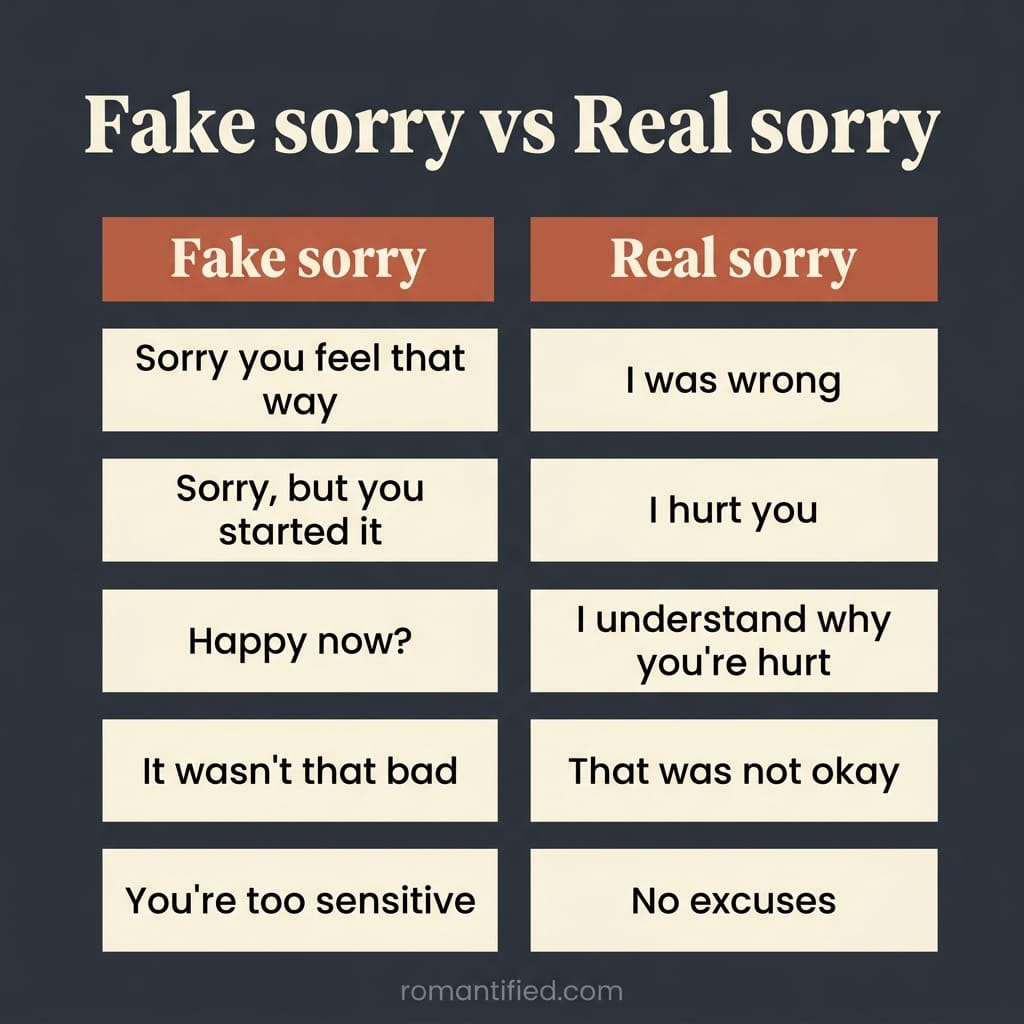
Eventually, you'll hear things like, "I'm sorry you feel that way." "I'm sorry, but you did start this." "Okay fine, you want me to say sorry? I'm sorry. There. Happy now?"
You might feel temporarily satisfied, but on the whole, you're not dealing with an apology at all. This is nothing but a performance designed to make you feel comfortable so that you feel pacified by their apparent accountability. This is not accountability.
The narcissist just wanted whatever problem it was to go away. Real accountability sounds like:
I am so sorry I did this to you. I didn't mean to hurt you. I was wrong, and that was not okay. I understand why you're hurting. It's specific to what happened, and there are no terms and conditions attached to any of it.
Notice something? Not one of those sentences contains the word "but." The moment you hear "but" glued onto a sorry, you're not getting an apology, you're getting a rebuttal in disguise.
5You deserve authenticity
Imagine a relationship ending all because a narcissist refused to let their guard down and admit that they were wrong, or that they handled things totally inappropriately. When you want someone to own up to their mistakes, you're not asking for too much.
You're asking for a bare minimum that isn't being met, and because of that, you're left feeling as though you're at fault for doing so. Let me just tell you right here and now, you are not to blame.
You deserve someone who is going to be honest with you, and as much as they are honest, they also need to be vulnerable.
Someday, I hope you come to know what that truly feels like, because it will be a relationship where both people value what they have, and want to work on any issues that arise. That person exists, but it's never going to be the narcissist.
If someone is willing to lose what they have rather than bow down and do the right thing, you have to ask yourself why you're even bothering trying in the first place. Stop.
The only thing it will lead to is more disappointment, and it will be more of a waste of your time.
 See alsoThe Narcissist Wants These 7 Things From You Because They Can't Find Them in Themselves
Save that energy for someone who will meet you halfway. Someone who can say the words "I was wrong" without their whole identity collapsing on the kitchen floor.
6What it looks like when they'd rather blow it all up
Picture this. A birthday dinner booked months in advance. The table is set, your family has flown in, and the narcissist decides tonight is the night to bring up an old argument you thought was resolved.
Suddenly they're grabbing their coat, telling everyone they can't stay because you've "made things impossible again."
They will torch the whole evening rather than say, "You know what, I was out of line last week."
Blowing it all up looks like walking out mid-holiday. Cancelling the wedding venue two weeks before. Sending a group text that outs private information. Emptying the joint account and going quiet for four days. Telling your mother something you told them in confidence, just to watch you scramble.
Every single one of these moves has the same root. They would rather set fire to the whole house than open one door marked "I got it wrong."
And here's the wild part. As the flames rise, they'll be calm. Almost relieved. Because destruction, to them, still feels safer than accountability.

 See also5 Creepy Things Every Narcissist Hides Somewhere in Their House
7The silent treatment that says everything
You ask them a question, and there's nothing. You send a message, and it sits there unread for days, maybe weeks. You walk into a room and they look through you like you don't exist.
This is the silent treatment, and it's the narcissist's favourite way of avoiding the words "I was wrong" without ever having to say them out loud.
Silence, for them, is a weapon. If they refuse to engage, they never have to own anything. They never have to sit with the discomfort of being the one at fault. You're left dangling, questioning yourself, replaying every conversation to work out what you did.
And you probably did nothing. That's the worst part. The silence isn't about your behaviour, it's about their refusal to acknowledge theirs.
They'd rather let the quiet stretch on for weeks than crack open their mouth and admit fault. And when the silence finally breaks, guess what won't be in it? An apology. Not a real one, anyway.